
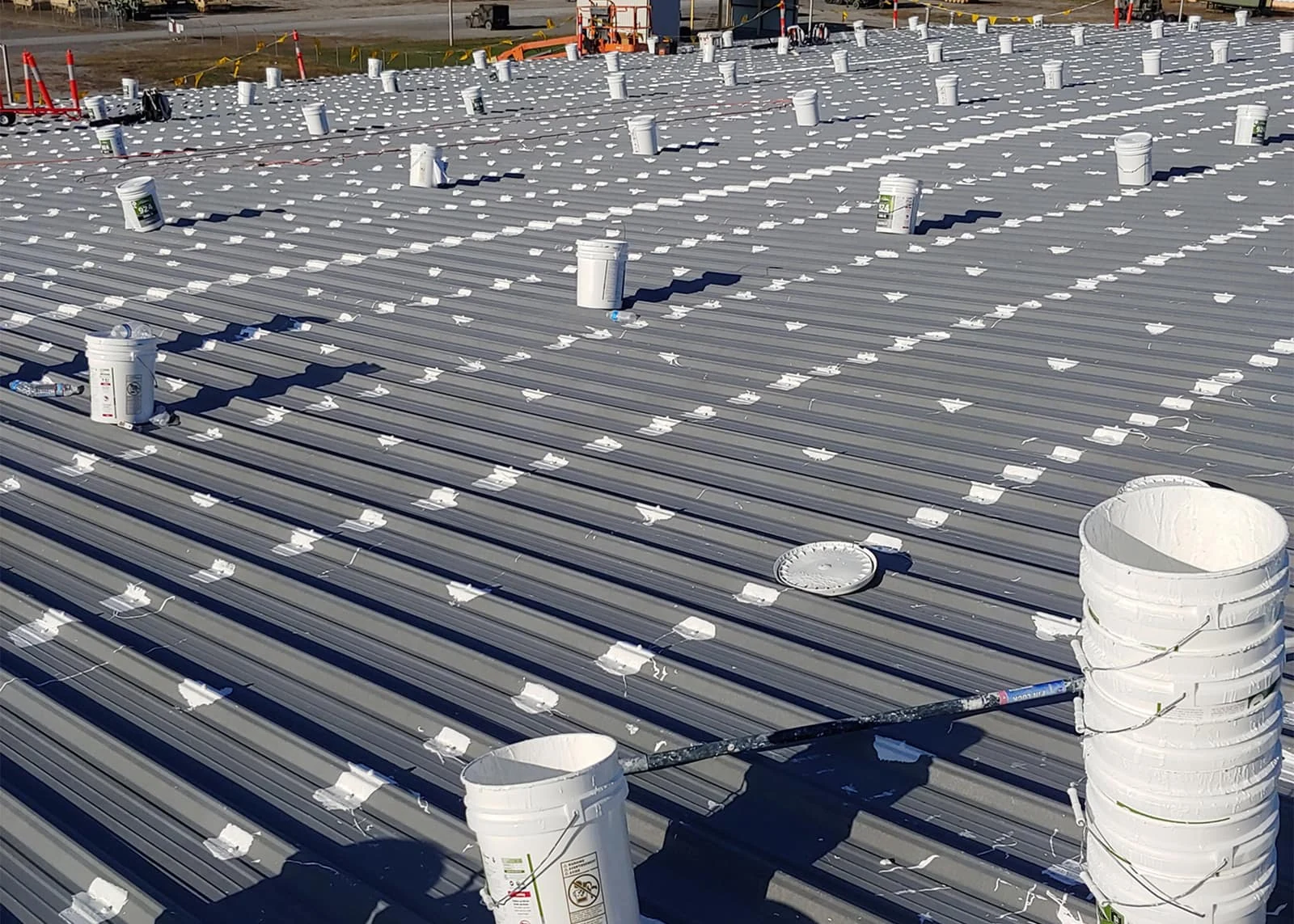
Silicone Recoat Systems for Roofs That Sit Wet Most of the Year
Silicone coating is the one roof system on this list that we specify almost entirely as a recoat over existing membrane rather than as new construction, and it's the option we bring up most often for aging TPO, EPDM, and modified bitumen roofs around Eugene that are past their prime but not structurally in trouble. Its standout property for this climate is genuine ponding-water resistance.
Ponding Resistance Is the Real Selling Point
Most roof coatings degrade under standing water, but silicone is formulated specifically to resist it, which matters on flat commercial roofs around the region with a documented low spot that isn't practical to fully re-slope. We've recommended silicone coating specifically because it tolerates ponding conditions that would shorten the life of acrylic or asphaltic coatings.
That doesn't mean we skip the drainage conversation. Where a roof has a correctable low spot, we still discuss tapered insulation or added drains as the underlying fix. Silicone coating is the right answer when ponding is a structural or budget reality the owner is managing around, not when it's an easy fix being avoided.
Moisture-Cure Chemistry in a Wet Climate
Silicone coatings cure by reacting with atmospheric moisture rather than needing a dry window like some other coating chemistries, which is a genuine advantage in a region where a fully dry multi-day stretch isn't guaranteed even in summer. We still schedule application around active rain, since the coating needs to be tack-free before a hard rain hits, but the cure process itself tolerates humidity well.
This makes silicone a practical choice for late-season recoat work when an owner needs a roof addressed before winter and the forecast isn't cooperating with a longer dry window that other systems might need.
Recoating Instead of Replacing
A silicone recoat over sound existing membrane extends roof life at a fraction of full replacement cost, and we walk owners through the inspection that determines whether a roof qualifies. Wet insulation, structural deck issues, or membrane that's torn rather than just weathered rules out a recoat in favor of full replacement.
On the office and retail buildings around Eugene and Springfield where the existing membrane is aged but dry and intact, a silicone recoat is often the most direct way to buy another decade of service life without a full tear-off.
- Cures by reacting with atmospheric moisture, tolerant of humid conditions
- Genuine resistance to standing water, unlike most coating chemistries
- Applied over sound existing membrane rather than as new construction
- Requires moss and algae removal before application for proper bond
- Costs a fraction of full tear-off replacement on a qualifying roof
- Not a fix for wet insulation or a torn, deteriorated membrane
Moss and Surface Cleanliness Before Coating
Silicone coating won't bond properly over an active moss or algae layer, so any roof we're recoating gets pressure-washed and, where needed, treated to remove organic growth before coating goes down. Roofs under mature canopy near campus and older commercial blocks along the river corridors often need this step more aggressively than roofs in open industrial parks.
After coating, the smooth silicone surface resists new moss establishment better than the aged, weathered membrane it's covering did, which is part of the value case for owners dealing with a recurring moss problem.
Cold Weather and Ice-Storm Durability
Cured silicone coating stays reasonably flexible through the Valley's occasional cold snaps and ice events, better than an aged, brittle membrane underneath it. That's part of why a recoat can extend the service life of an older roof heading into another winter rather than just patching problems as they appear.
We still recommend pre-winter inspection on recoated roofs, checking flashing terminations and drain strainers, since the coating restores the field membrane's performance but doesn't change the condition of flashings and penetrations underneath it.
What Disqualifies a Roof From a Silicone Recoat
Not every aging roof is a good recoat candidate. Wet insulation trapped under the membrane, structural deck damage, or membrane that's torn rather than simply weathered all point toward replacement instead. We use a combination of visual inspection and, where the roof's history warrants it, moisture scanning to confirm the substrate is dry before recommending a silicone recoat.
Skipping that step and coating over a roof with trapped moisture just seals the problem in rather than solving it, and it's a shortcut we won't take even when an owner is hoping to avoid the cost of further investigation.
Questions on Silicone Roof Coatings Locally
Can silicone coating go over any existing roof membrane?
Only over membrane that's dry, structurally sound, and free of major tears. We inspect the existing roof and underlying insulation before recommending a recoat over a tear-off.
Does silicone coating actually stop ponding water damage?
It resists degradation from standing water better than most other coating types, though we still address correctable drainage issues as the underlying fix where practical.
Can silicone coating be applied during the rainy season?
It cures by reacting with atmospheric moisture, which helps in a humid climate, but the coating still needs to be tack-free before a hard rain. We schedule around forecast windows.
Does moss need to be removed before recoating?
Yes, active moss or algae prevents proper adhesion. We pressure-wash and treat the roof surface before any coating goes down.
How long does a silicone recoat extend a roof's life?
It varies by the condition of the underlying membrane, but a sound roof recoated before it deteriorates further can often gain another decade of service life.