
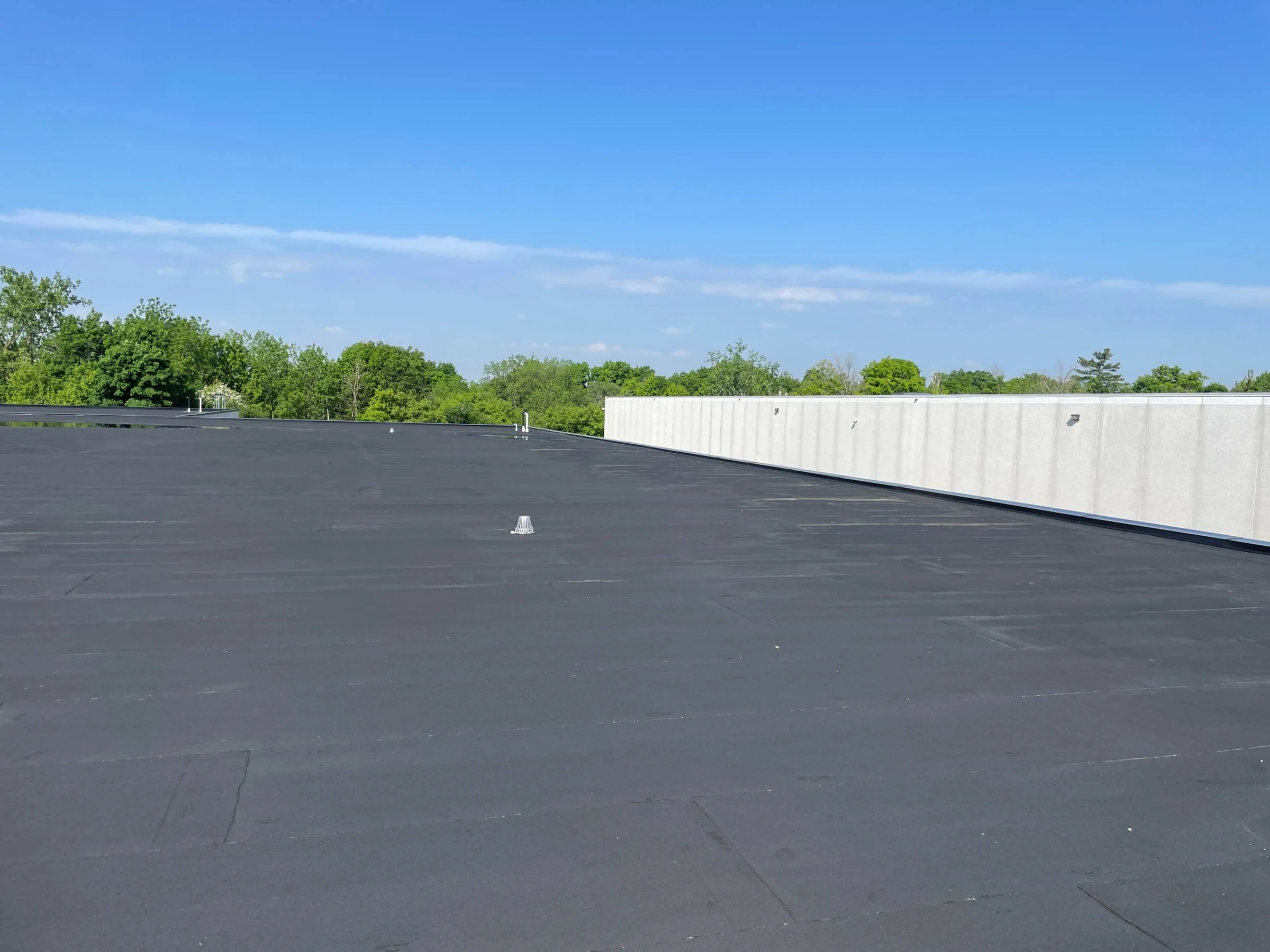
SBS Modified Bitumen for Multi-Layer Roof Redundancy
SBS modified bitumen builds a roof out of multiple asphalt-based plies rather than a single membrane sheet, and that redundancy is the main reason we still specify it on some Eugene buildings, particularly older commercial stock already built on a built-up roofing base. It's a heavier, more labor-intensive system than single-ply, and it isn't the right call for every roof.
Multi-Ply Redundancy in a Wet Climate
A typical SBS system layers a base sheet and a cap sheet, sometimes with additional plies, so a flaw in one layer doesn't automatically mean a leak the way it can on a single-ply membrane. In a climate where the roof surface is wet more months than not, that redundancy has real value on buildings where access for repairs is difficult or infrequent.
The tradeoff is more seams overall and a heavier system that adds structural load, which matters on some of the older masonry and wood-frame commercial buildings around downtown and the older industrial blocks near the river.
Torch-Applied vs. Cold-Applied Installation
Torch-applied SBS uses an open flame to melt the asphalt and bond the plies, which requires strict fire-watch protocol, especially on roofs near wood-frame construction or adjacent to occupied space. We use cold-applied or self-adhered SBS systems on buildings where torch application raises fire risk we're not comfortable carrying, even when it costs more in labor.
Cold weather and damp conditions slow cold-applied adhesive cure times, so we schedule SBS installation around forecast windows the same way we do for taped EPDM seams, watching for a dry stretch long enough for the system to set properly before rain returns.
Granulated Cap Sheet and Moss Growth
The mineral-granule surface on most SBS cap sheets is more prone to catching organic debris and holding moisture than a smooth single-ply membrane, which means moss and algae establish faster on SBS roofs under tree canopy than on TPO or PVC in the same location. This shows up regularly on older buildings near the university and along river-adjacent commercial corridors with mature tree cover.
We recommend more frequent cleaning cycles on granulated SBS roofs specifically for this reason, and we inspect granule loss at drains and low points during those visits, since bald spots on an aging cap sheet are an early warning sign before they become a leak.
- Multiple asphalt-based plies add redundancy against a single-point failure
- Torch-applied installation requires strict fire-watch protocol
- Cold-applied systems avoid open flame but need a dry cure window
- Granulated cap sheet catches more organic debris than smooth membranes
- Tolerates ponding worse than TPO or PVC over the long term
- Common upgrade path on older built-up roofing stock downtown
Drainage and Ponding on a Heavier System
SBS roofs tolerate ponding worse than PVC or TPO over the long term, since sustained standing water accelerates granule loss and asphalt aging at the surface. On flat commercial roofs with a known low spot, we're more likely to recommend correcting slope before installing a new SBS system than we would be with a welded thermoplastic membrane.
Internal and perimeter drains on older SBS roofs also tend to be original to a building built decades ago, and we check flow and clear debris as a standard part of any SBS inspection, since undersized or partially blocked drainage is common on this vintage of roof stock.
Cold Weather and Occasional Ice Events
Asphalt-based membranes become more brittle in hard cold than thermoplastic or rubber alternatives, and the Valley's occasional ice storms are worth planning around specifically on SBS roofs. Impact from falling ice or heavy foot traffic during a freeze can crack a cap sheet that would otherwise flex fine in normal conditions.
We schedule SBS inspections and any granule or flashing repairs before the winter season starts, and we hold off on non-emergency roof access during active ice events regardless of membrane type.
Matching SBS to the Right Kind of Recover
Not every older built-up roof needs a full tear-off, and SBS modified bitumen is often the most direct recover path when the existing roof is dry, structurally sound, and compatible with a new asphalt-based system. We evaluate the existing roof's condition carefully before recommending SBS over a single-ply alternative, since the two systems aren't always interchangeable on the same substrate.
Where an owner is deciding between staying with a traditional multi-ply system or switching to single-ply membrane during a recover, we lay out the tradeoffs directly: SBS offers redundancy and familiarity to older building stock, while single-ply generally offers easier long-term maintenance and better ponding tolerance.
Questions on SBS Modified Bitumen Locally
Is torch-applied SBS safe near occupied buildings?
It requires strict fire-watch protocol, and we default to cold-applied or self-adhered systems on roofs near wood-frame construction or occupied space where we're not comfortable with open-flame application.
Does SBS handle ponding water as well as TPO?
No, sustained standing water accelerates granule loss and asphalt aging on SBS faster than it degrades a welded thermoplastic membrane. We prioritize correcting drainage on SBS specs.
Why does moss grow faster on SBS roofs than TPO roofs?
The mineral-granule cap sheet surface catches and holds organic debris more than a smooth membrane, which speeds up moss and algae establishment under tree canopy.
Can SBS modified bitumen go over an existing built-up roof?
Often yes as part of a recover, provided the existing roof is dry and structurally sound to carry the added weight. We evaluate the substrate before recommending that path.
How does SBS perform during a Willamette Valley ice storm?
Asphalt-based membrane stiffens more than thermoplastic or rubber alternatives in hard cold, so we avoid non-emergency roof access during active freezes and inspect beforehand instead.