
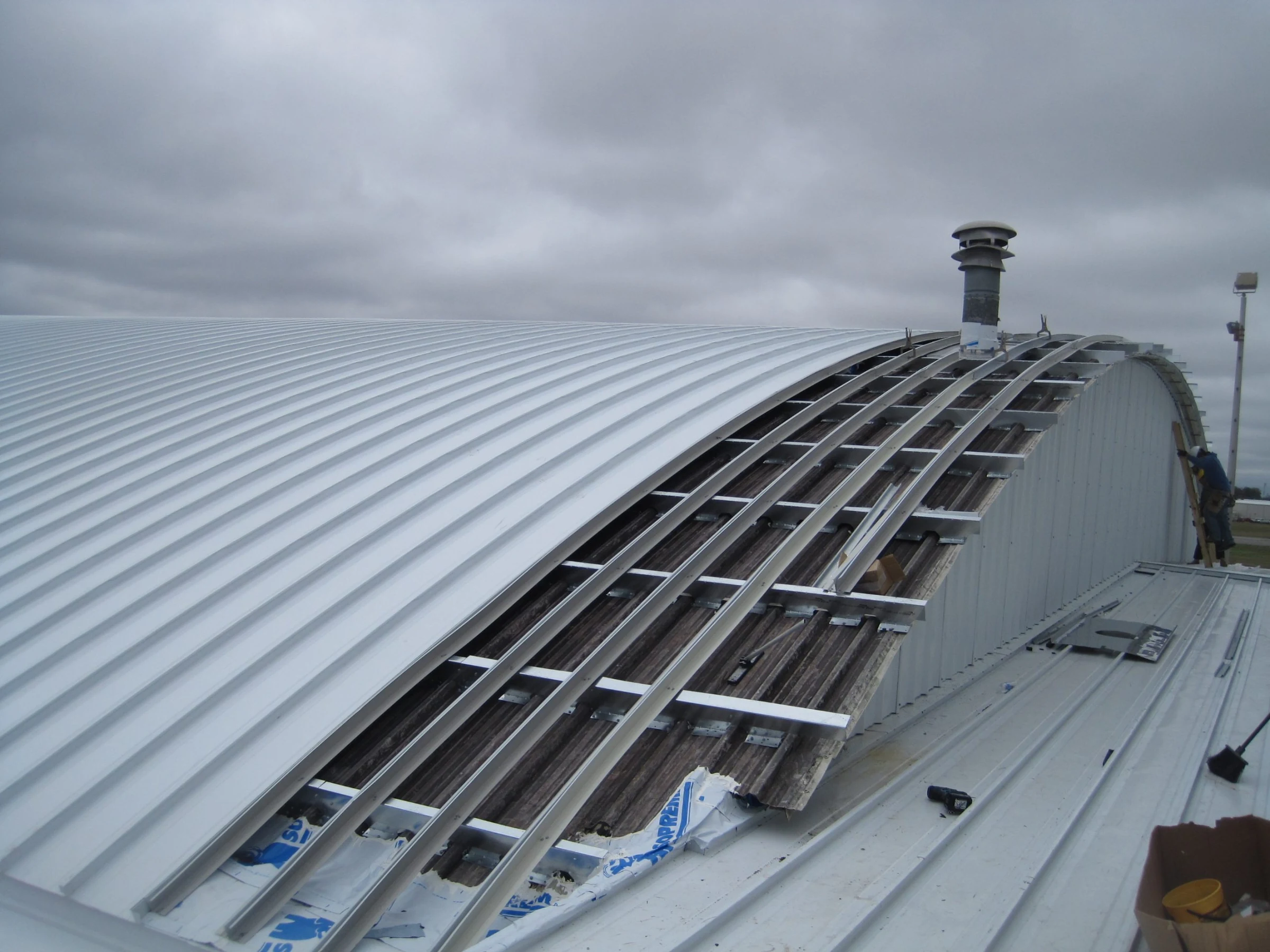
Recover Roofing Instead of Tear-Off When the Deck Still Tests Dry
A recover, installing a new membrane and insulation layer over an existing roof rather than stripping it down to the deck, saves real money and avoids disrupting an occupied building. Whether it's the right call comes down to one question we won't skip: is the existing assembly actually dry.
Why the Moisture Survey Comes First, Always
In a climate where a roof spends most of the year wet, the temptation to assume moisture is present somewhere in an aging assembly is reasonable, but assumption isn't good enough to base a recover decision on. We run infrared moisture scanning or core sampling, sometimes both, across the existing roof before recommending recover over tear-off. Wet insulation under a new membrane layer doesn't dry out, it just continues degrading invisibly under a roof that now looks new from above, and it can eventually compromise the new membrane's warranty and performance along with it.
If the survey comes back clean, a recover is often the right economic choice. If it shows moisture pockets, even limited ones, we're straightforward about it: those areas need tear-off and deck repair regardless of what the rest of the roof shows, and a partial tear-off combined with recover elsewhere is often the practical middle path.
What a Recover Assembly Actually Involves
A typical recover starts with removing loose gravel, wet insulation, or failed membrane sections identified in the survey, then installing a new layer of insulation, often polyiso board, over the existing sound substrate, followed by the new membrane system, whether TPO, PVC, or another option matched to the building. The new insulation layer also gives an opportunity to improve the roof's R-value and, with tapered insulation, correct minor drainage deficiencies that have been causing ponding on the existing roof.
That drainage correction is often an underrated benefit of a recover project here. A roof with a chronic low spot that's been ponding water for years can sometimes get that condition solved as part of the recover scope, using tapered insulation to redirect flow toward drains rather than just recovering the same flat profile with new materials.
Code and Weight Limits on Layering
Building codes generally limit how many roof layers can be stacked before a recover isn't permitted and a tear-off becomes mandatory regardless of moisture condition. Older buildings around Eugene that have already been recovered once or twice over past decades often hit that layer limit, which we check early in the process rather than discovering it partway through a project scope. Structural capacity is the other constraint, particularly relevant on older wood-frame buildings tied to the area's mill-era construction, where added weight from a new recover layer needs to be confirmed against the deck's original design load.
Where Recover Makes Sense Around the Valley
Occupied manufacturing buildings where a full tear-off would disrupt production schedules are strong recover candidates, since recover work generally proceeds with less interior disruption than a complete roof removal. Institutional buildings near the university, where scheduling around active operations matters, often prefer recover for the same reason. Warehouse and distribution buildings with straightforward, dry roof assemblies and no history of leaks are usually the cleanest recover candidates, since there's less risk of hidden moisture complicating the project.
When Tear-Off Is the Only Real Option
Widespread wet insulation, deck damage from long-term moisture exposure, or a roof that's already at its code-permitted layer limit all point to tear-off regardless of cost preference. We don't recommend recovering over a compromised substrate to save money upfront, because it typically costs more later when the hidden problem resurfaces under a membrane that's now harder to access and diagnose.
Recover Project Checklist
- Infrared moisture scan or core sampling across the full roof area
- Layer count and code compliance check for existing roof assembly
- Structural load verification for the deck and framing
- Removal of wet insulation or failed sections identified in survey
- Tapered insulation planning to correct known drainage issues
- New membrane installation matched to building use and exposure
Cost Comparison Against Full Tear-Off
Recover typically costs meaningfully less than tear-off and replacement, largely from avoided disposal costs and reduced labor time, and it minimizes disruption to whatever operation is running underneath the roof. That savings only holds up if the survey confirms the existing assembly is a legitimate recover candidate. A recover attempted over a wet substrate to save money upfront tends to cost more in the long run once the trapped moisture forces a premature second replacement.
Common Recover Questions
How do you know if my roof is dry enough to recover instead of tear off?
We run an infrared moisture scan and, where needed, core samples across the roof to check for trapped moisture in the existing insulation before making a recommendation either way.
Can a recover fix a roof that's been ponding water in one area?
Often yes. Tapered insulation installed as part of the recover assembly can correct minor drainage deficiencies that were causing the ponding, redirecting flow toward the drains.
How many times can a roof be recovered before it needs full tear-off?
Building codes typically cap the number of roof layers allowed, so a roof that's already been recovered once or twice before may be at or near that limit regardless of current condition.
Is recover always the cheaper option?
Usually, but only when the substrate is genuinely sound and dry. If a moisture survey finds significant trapped water, tear-off becomes necessary and attempting recover instead just delays and increases the eventual cost.
Will a recover disrupt operations inside the building?
Less than a full tear-off typically does, since there's no interior deck exposure during removal. Some noise and rooftop activity is unavoidable, but we coordinate scheduling around active operations where possible.