
Roofing for Standalone Restaurant Buildings in Eugene
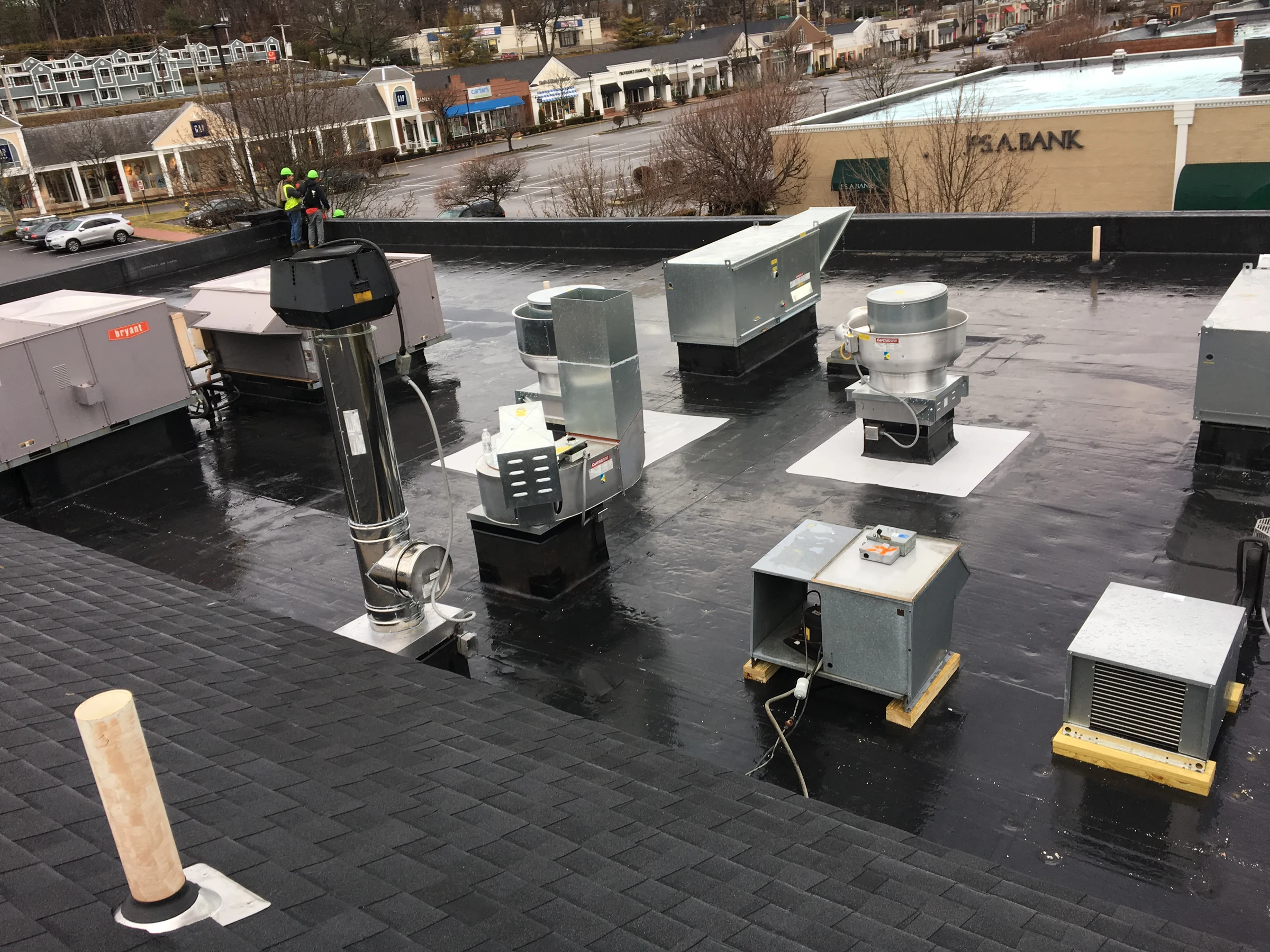
A restaurant roof does one thing that most commercial roofs don't: it sits directly above kitchen exhaust systems pulling hot, grease-laden air through a rooftop hood and fan assembly for most of the hours the building is occupied. Standalone restaurants around Eugene, from quick-service buildings along the retail corridors to sit-down restaurants on their own lots, all carry that same exhaust load, and we roof them with grease management and kitchen equipment penetrations as the central concern, not a side detail.
Grease-Laden Exhaust and Membrane Degradation
Kitchen exhaust hood discharge carries grease vapor that settles on the roof membrane downwind of the exhaust fan, and over time that grease breaks down certain membrane materials faster than normal weathering would on its own. We check the membrane condition specifically in the discharge zone during every restaurant roof inspection, since this is one of the more common places we find accelerated wear that a general roof-age estimate wouldn't predict.
Grease containment systems, where installed, need regular attention too. A grease trap or containment pan that isn't being serviced on schedule by the restaurant's kitchen exhaust cleaning vendor will overflow onto the roof membrane, and we flag this when we see it even though servicing the containment system itself isn't roofing work.
Kitchen Hood Curb and Fan Assembly Flashing
The kitchen exhaust fan curb is typically the largest and most heavily used roof penetration on a restaurant building, and it's under near-constant vibration from the fan motor whenever the kitchen is operating. That vibration works against fastener and flashing integrity over time in a way that a static rooftop unit doesn't experience to the same degree. We inspect fan curb attachment and flashing condition as a priority item, since a failure here affects both the roof and the kitchen exhaust system's performance.
Scheduling Around Dinner-Hour Kitchen Operations
Most standalone restaurants run their heaviest kitchen operations during a predictable window, typically lunch and dinner service, and roof work directly above an active kitchen during those hours creates both a noise and a food-safety concern if debris or dust could reach prep or cooking surfaces. We schedule tear-off and fastening work for mid-morning or mid-afternoon lulls between meal services wherever the restaurant's operating pattern allows it, and we coordinate directly with kitchen management rather than just the building owner.
Grease Trap and Roof Drain Interaction
Roof drains near the kitchen exhaust area sometimes end up collecting grease residue along with normal rainwater, especially on roofs where the discharge zone sits close to a drain. That combination clogs faster than a standard drain would from rain and debris alone, and nine wet months of rain means a partially grease-clogged drain gets tested often. We check these drains specifically rather than assuming they behave like drains elsewhere on the roof.
- Membrane condition in the kitchen exhaust discharge zone
- Fan curb attachment and flashing integrity under vibration load
- Grease containment pan overflow signs near the exhaust assembly
- Drain condition where discharge zones sit close to roof drains
- Rooftop makeup air unit curb condition serving the kitchen
- Sign and canopy penetrations added after original construction
Fire Safety and Insurance Considerations
Kitchen exhaust systems are subject to fire code inspection requirements separate from roofing, but the roof condition around the hood and fan assembly matters to that overall picture. We document flashing and membrane condition near exhaust equipment in writing, which gives a restaurant owner something to reference alongside their exhaust cleaning and fire suppression service records if an insurance carrier asks about roof-adjacent kitchen equipment condition.
Emergency Response for Active Restaurants
A leak over a kitchen line during service hours is a genuine operational emergency for a restaurant, both for food safety and for keeping the kitchen running through a dinner rush. We prioritize these calls and work to stabilize the leak with minimal disruption to active cooking operations, scheduling a permanent fix for a lower-traffic window once the immediate risk is handled.
Patio and outdoor seating canopies attached to a standalone restaurant building come with their own drainage quirks, especially where a lower canopy roof ties back into the main building at a height change. We check that tie-in during every restaurant inspection, since a poorly flashed canopy connection can send water back toward the building wall rather than off the edge where it's supposed to drain, and that pattern tends to show up as interior wall staining long before anyone notices it from outside.
Common Questions About Standalone Restaurant Roofing
How does kitchen exhaust affect the roof membrane over time?
Grease vapor discharged from the exhaust hood settles on the roof downwind of the fan and can degrade certain membrane materials faster than normal weathering, which is why we check this zone specifically during inspections.
Can you schedule work around lunch and dinner service?
Yes, we coordinate with kitchen management to identify lulls between meal periods and schedule noisy or disruptive work for those windows wherever the restaurant's operating pattern allows.
Do you inspect the kitchen exhaust fan curb specifically?
Yes, this is typically the largest and most heavily used penetration on a restaurant roof, and constant fan vibration puts extra stress on its flashing and attachment.
What happens if a grease containment system overflows onto the roof?
We flag it during inspection, even though servicing the containment system itself falls under the kitchen exhaust cleaning vendor's scope rather than roofing.
How fast can you respond to a leak during service hours?
We treat kitchen-area leaks as urgent given the food safety and operational stakes, and we work to stabilize the source with minimal disruption to active cooking before scheduling a permanent repair.