
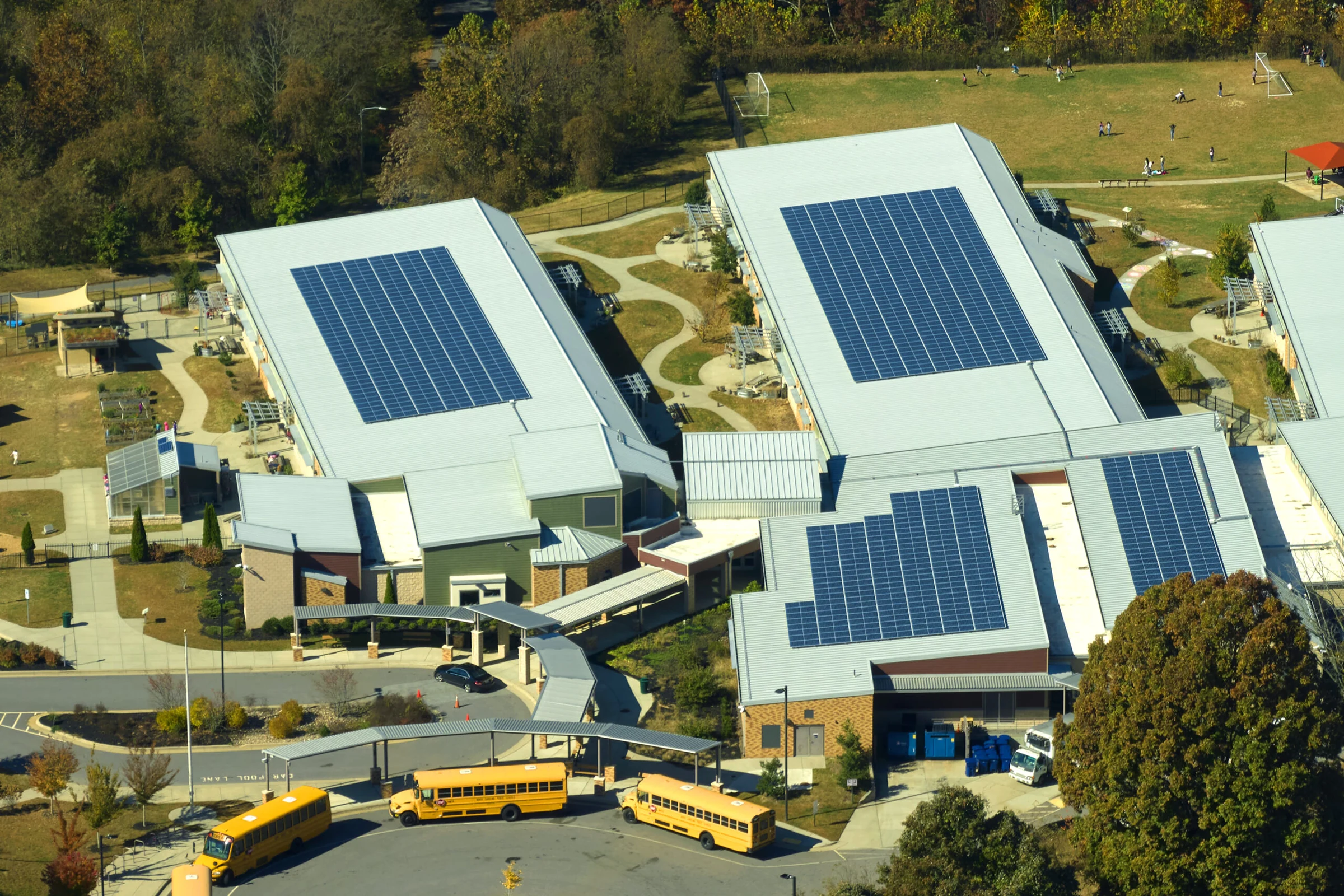
Roofing for K-12 School Buildings in Eugene
School roofs answer to a calendar and a budget that don't move for anyone. Summer break is the real construction window for most reroofing and major repair work, and every district we work with is managing that roof against a bond cycle or a maintenance fund that has to stretch across dozens of buildings at once, not a single one. We roof elementary, middle, and high school buildings across the Eugene area with both of those constraints built into how we schedule and how we document.
The Summer Construction Window
Most substantial school roof work happens between the last day of school in June and the first day back in September, and that window is shorter than it looks once you account for summer programs, athletic camps, and facilities crews who need the building back in usable condition before staff return for pre-service days. We plan tear-off and installation sequencing to fit that window from the start of a project, not as a scramble once summer arrives, because a reroof that runs past the start of the school year creates problems no district wants to explain to parents.
Occupied-building work during the school year is different and more limited in scope. We handle leak repair and smaller maintenance items while school is in session, working around the schedule and keeping noise and access away from classroom windows during instructional hours.
Gymnasium and Cafeteria Roof Spans
Gyms and cafeterias are usually the largest clear-span roof areas on a school campus, and that structural design comes with its own roofing considerations. Long spans deflect differently than a roof over a standard classroom wing, and drainage has to be designed around that movement rather than assuming a flat, uniform deck. We check these areas specifically during inspection, since a gym roof problem often shows up as a stain on the wood floor below long before anyone notices anything from outside.
Portable Classrooms and Roof Connections
A lot of school campuses in this area have added portable or modular classrooms over the years, and where those units connect to a permanent building's roofline, the flashing detail is often an afterthought from whoever installed the portable. We inspect these transition points as a standard part of any school roof assessment, because they're a common source of leaks that get blamed on the portable when the actual problem is where it meets the main building.
Playground Canopy and Covered Walkway Structures
Covered play areas and connecting walkways between buildings take constant weather exposure with less maintenance attention than the main roof, since they're often lower-priority in a facilities budget. We include these structures in a full-campus assessment rather than treating them as separate from the building roofs, since a failing walkway canopy still creates a liability and comfort problem for a district even if it's not over classroom space.
- Membrane condition on gymnasium and cafeteria clear-span roof areas
- Flashing detail where portable classrooms connect to permanent rooflines
- Drain and gutter capacity across multi-building campus footprints
- Covered walkway and playground canopy structural and membrane condition
- Roof access security for buildings occupied by children during school hours
- Rooftop unit curb condition near HVAC systems serving classrooms
Working Safely Around an Occupied Campus
Any roof work during the school year requires access control that keeps crews, ladders, and materials away from students, and we plan staging areas and access routes with that as a first priority, not a compliance checkbox. We coordinate with front office staff and facilities managers on sign-in procedures and keep equipment secured or removed at the end of each work day.
Recess and passing-period timing matters too, since ladder and equipment staging near a playground or covered walkway during those windows puts crews close to a lot of moving students at once. We schedule ladder movement and material staging around the bell schedule wherever a district shares one with us, rather than working on a fixed clock that ignores when the building empties into hallways and outdoor areas.
Bond Cycle and Capital Documentation
School districts plan major roof replacement through bond measures or capital improvement plans that get approved years in advance, and a facilities director building that case needs documentation that holds up in front of a school board or a bond committee. We provide a written condition assessment with photos and a clear scope breakdown between urgent repair and planned replacement, so a district can make the case for funding with something concrete rather than a general sense that a roof is getting old.
Common Questions About K-12 School Roofing
Can you complete a reroof entirely within summer break?
For most single-building projects, yes, provided the scope is scheduled from the start with the summer window in mind. Larger multi-building campus projects sometimes need to be phased across more than one summer.
Do you work on school buildings while students are present?
We handle leak repair and limited maintenance during the school year, scheduling noisy or disruptive work outside instructional hours and coordinating access with the front office.
How do you handle roofs where portable classrooms connect to the main building?
We inspect and reflash these transition points as standard practice, since they're a frequent source of leaks that don't originate with the portable unit itself.
Can you provide documentation for a bond measure or capital request?
Yes, we provide a written condition assessment and photo documentation that separates urgent repair needs from planned replacement, useful for a school board or bond committee presentation.
What access and safety procedures do you follow on an occupied campus?
We coordinate sign-in and staging with facilities and front office staff, keep equipment secured away from student areas, and remove or lock down materials at the end of each work day.