
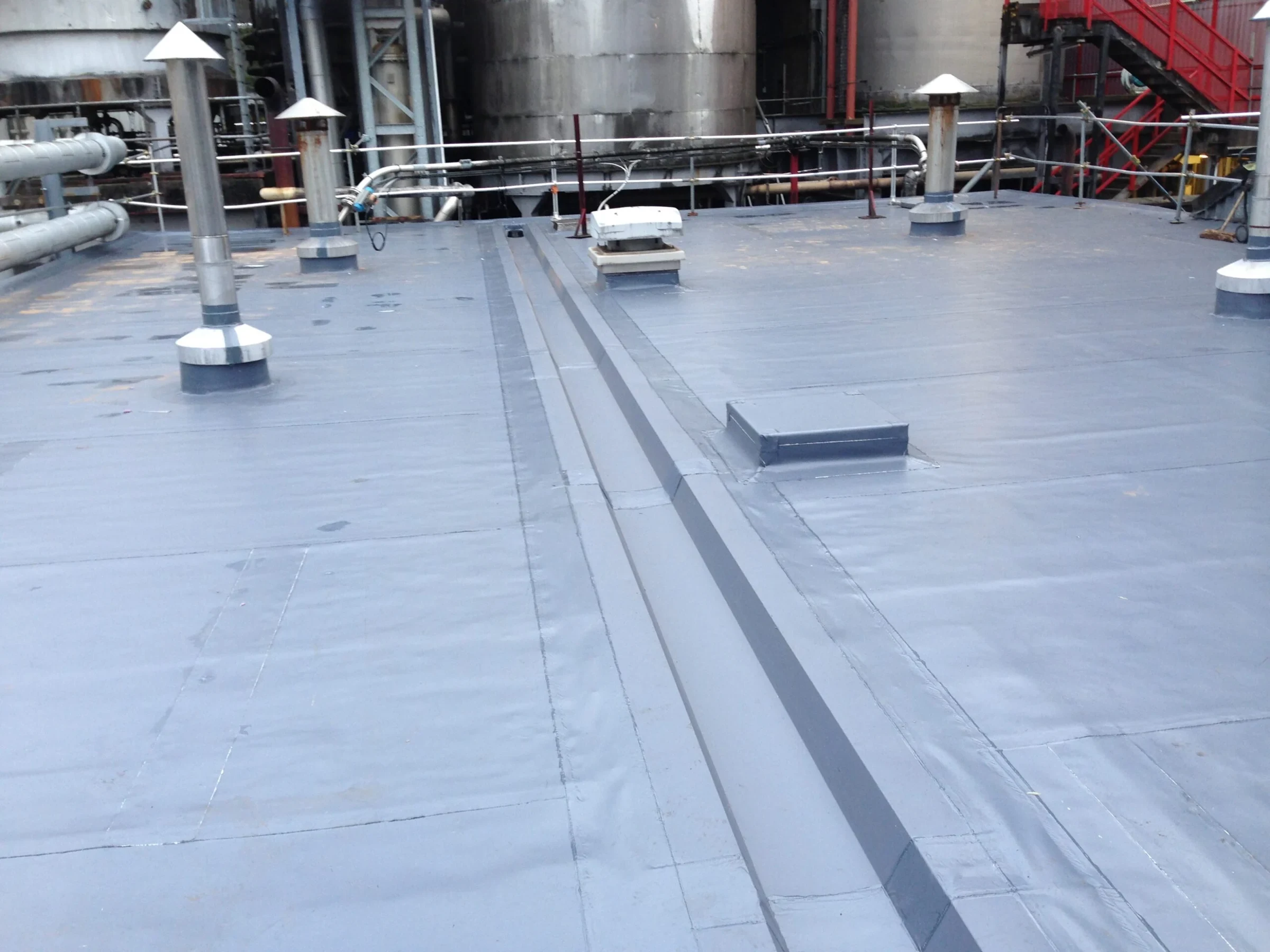
Sika Sarnafil and Long-Standing PVC Membrane Technology
Sika Sarnafil is the commercial roofing membrane division of Sika AG, a Swiss building-materials company, and the Sarnafil brand is among the longer-established names specifically in PVC roofing membrane. When chemical resistance, grease exposure, or ponding tolerance point toward PVC over TPO or EPDM, Sarnafil is one of the manufacturers we bring into that conversation.
A PVC-Focused Manufacturer
Unlike manufacturers with broad catalogs spanning EPDM, TPO, and PVC, Sarnafil's roofing membrane business centers on PVC, reflecting the brand's long history specifically in that membrane chemistry. That focus means the product line is deep within PVC options, covering different thicknesses and surface finishes for different exposure conditions.
For Eugene buildings where we've already determined PVC is the right membrane chemistry; usually driven by grease exposure on restaurant roofs or chemical residue near manufacturing operations; Sarnafil is a credible option within that category.
Heat-Welded Seams for Sustained Wet Conditions
Sarnafil PVC uses the same heat-welded seam method as other PVC and TPO membranes, forming a fused bond that holds up under the region's extended wet stretches better than a taped or adhesive seam would. We probe welds during installation and again in the roof's first full wet season, standard practice regardless of manufacturer.
PVC's chemical resistance is Sarnafil's particular strength, which matters most on the restaurant and light-manufacturing roofs around Eugene where grease or solvent residue is a documented condition rather than a hypothetical concern.
Ponding Tolerance and Drainage
PVC generally handles occasional ponding better than most alternatives, and Sarnafil's product line performs consistently with that general PVC advantage. We still treat correcting slope and drainage as the primary fix on a roof with a known low spot, using PVC's ponding tolerance as a safety margin rather than a design strategy.
On flat industrial and food-service roofs where full re-sloping isn't practical in the current budget, Sarnafil's PVC membrane is one of the options that can buy an owner years before drainage work becomes unavoidable.
- Roofing membrane division of Sika AG, a Swiss building-materials company
- Product focus centers on PVC membrane rather than a broad multi-chemistry catalog
- Heat-welded seams form a fused bond suited to sustained wet conditions
- Chemical and grease resistance are the category's core advantage
- Handles occasional ponding better than most non-PVC alternatives
- Compared against other established PVC manufacturers by fit and cost
Moss and Surface Maintenance
Sarnafil's smooth PVC surface resists moss establishment better than granulated or textured roofing materials, similar to other smooth single-ply membranes, though roofs under mature canopy near campus and older commercial blocks still accumulate organic debris over time without maintenance. On restaurant roofs specifically, we often combine moss control with the periodic grease-cleaning schedule those roofs already need.
Warranty and installer training requirements follow the same industry-standard pattern as other manufacturers: documented, compliant installation to qualify for extended coverage, which we confirm and record on any Sarnafil project.
Where Sarnafil Fits Among PVC Options
Several manufacturers produce PVC membrane, and Sarnafil is one of the more established names specifically in that category. We compare it against other PVC options based on availability, thickness needs, and cost when a project calls for PVC's chemical resistance or ponding tolerance.
On a straightforward TPO or EPDM job without grease or chemical exposure, we typically won't bring Sarnafil into the comparison at all, since its PVC focus doesn't add value on a roof that doesn't need PVC's specific resistance properties. In those cases we'd rather put the owner's budget toward a TPO or EPDM system that fits the roof just as well for less cost, and say so directly rather than steering toward a specific manufacturer regardless of fit.
Sarnafil's Track Record With PVC Specifically
Because Sarnafil's roofing business has stayed centered on PVC for a long time rather than expanding broadly across every membrane chemistry, the product line reflects years of refinement within that specific category, including different surface finishes and reinforcement options for different exposure levels.
For an owner who has already decided PVC is the right membrane chemistry for a grease- or chemical-exposed roof, that depth of PVC-specific product development is a real consideration when comparing Sarnafil against a manufacturer offering PVC as one line among several. Sika AG operates globally across construction materials well beyond roofing, and its scale generally supports consistent product availability and technical documentation for contractors specifying Sarnafil membrane. We rely on that documentation when working through warranty terms and installation specifications with owners on a Sarnafil-specified project.
Questions on Sika Sarnafil PVC Membrane
What makes Sarnafil different from other membrane manufacturers?
Its roofing business centers specifically on PVC membrane rather than a broad catalog across EPDM, TPO, and PVC, reflecting a long history focused on that chemistry.
Is Sarnafil a good fit for a restaurant roof in Eugene?
Often yes. PVC's grease and chemical resistance is a real advantage on roofs exposed to kitchen exhaust residue, and Sarnafil is one of the established manufacturers in that category.
Do Sarnafil seams hold up in constant rain?
The heat-welded seam method forms a fused bond rather than a taped seam, which holds up well under sustained moisture, the same wet-climate advantage we look for across PVC and TPO manufacturers.
Does Sarnafil PVC resist ponding water?
PVC generally tolerates occasional ponding better than most alternatives, and Sarnafil's product performs consistently with that general PVC characteristic.
Do you specify Sarnafil over other PVC brands?
We compare it against other established PVC manufacturers on availability, thickness options, and cost for each specific project rather than defaulting to one brand.