
Commercial Roofers in Springfield
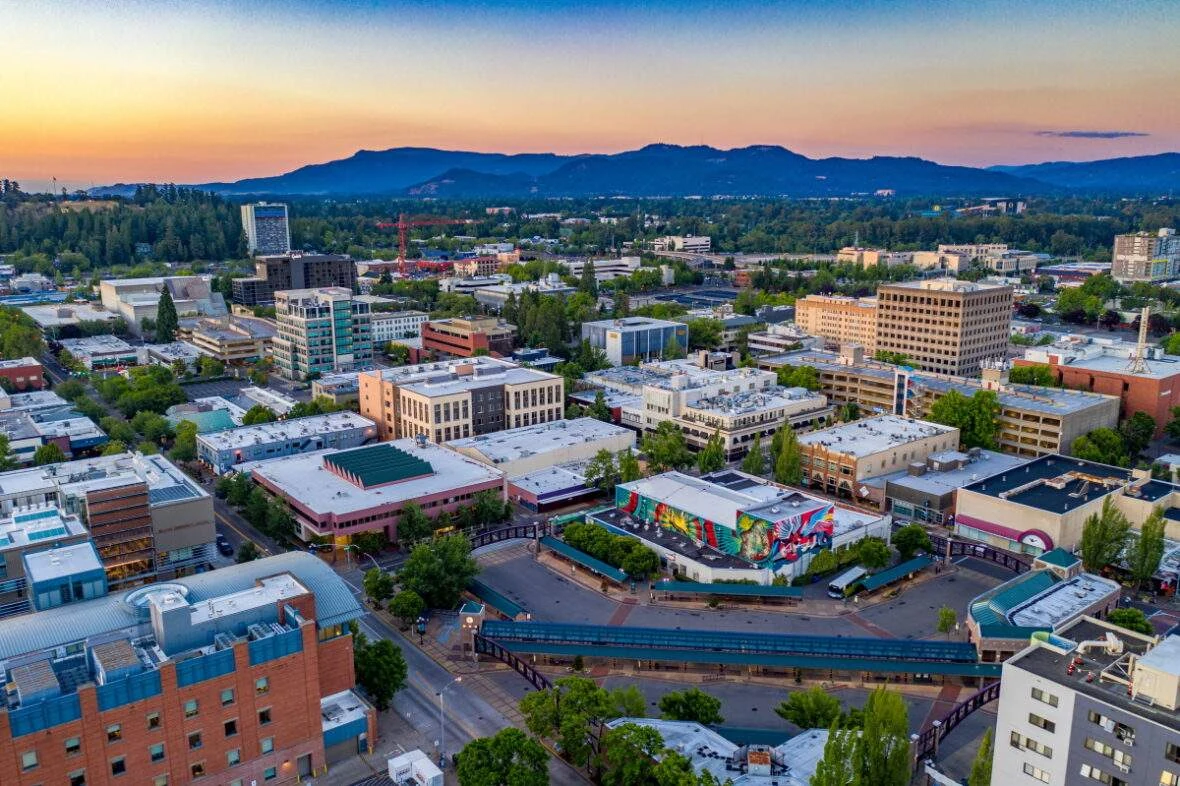
For commercial properties in Springfield, the defensible choice between repair, restoration, and replacement starts with roof-system condition, moisture findings, drainage performance, and remaining service life. Springfield sits across the Willamette from Eugene, and its building stock still carries the marks of a working mill town that grew into a regional healthcare hub. We work on everything from converted industrial shells near the river to the newer medical buildings clustered around RiverBend, and we size the scope to what each roof deck can actually support.
What the Wood Products Era Left on the Roof Deck
A lot of Springfield's older commercial buildings started life as sawmill, plywood, or planing operations before being subdivided into warehouse and light-industrial space. Many of those roofs are original built-up or modified bitumen systems, patched over decades, sitting on structural decks that were sized for a very different load and use than what's inside the building now. Before we quote anything on one of these older shells, we check deck condition and drainage slope first, before quoting anything on the membrane.
Newer construction along the Highway 126 corridor and Gateway area tends to be pre-engineered metal buildings with standing seam or exposed-fastener R-panel roofs. Those systems have different failure points entirely, usually at fastener backout and ridge or eave flashing rather than membrane seams, and we inspect them differently than we would a low-slope building.
RiverBend and Occupied Medical Buildings
Roof work near the RiverBend medical campus and the clinics that have grown up around it has to work around patient care, not the other way around. That means quiet installation methods where possible, scheduling around procedure hours, and materials that don't introduce strong odors into intake or ventilation systems mid-project.
TPO and PVC single-ply are the systems we lean on for these low-slope healthcare roofs. Heat-welded seams give a more reliable long-term seal than adhesive lap systems, and the reflective membrane surface helps with rooftop unit efficiency on buildings that run mechanical equipment around the clock.
Gateway and Mohawk Boulevard Retail Roofs
The strip retail centers and standalone restaurants along Mohawk Boulevard and through the Gateway district are almost all flat or low-slope roofs carrying multiple rooftop HVAC units. That's a lot of penetrations per square, and penetrations are where these roofs fail first, not the open field of the membrane.
Curb flashing, parapet caps, and pitch pans around conduit runs are the recurring trouble spots we find on retail inspections here. A tenant improvement done by someone unfamiliar with the roof system is often the reason a curb starts leaking two years later.
Willamette Valley Rain and Moss on Flat Roofs
Springfield gets the same wet-season rain load as the rest of the valley, and low-slope roofs here collect moss, fir needles, and big-leaf maple debris that build up around drains and low points if nobody's clearing them. Once moss establishes at a seam or lap edge, it holds moisture against the membrane and accelerates deterioration underneath. Building owners who skip fall and spring debris clearing tend to be the ones calling us in January with a ceiling stain that started as a clogged scupper back in October.
- Ponding water still present more than 48 hours after rain stops
- Moss or algae growth along seams and drain bowls
- Soft or spongy decking felt underfoot near roof edges
- Stained or sagging ceiling tiles below the roof line
- Granule buildup or debris clogging internal drains and scuppers
- Cracked or lifted flashing at parapet walls and curbs
Documentation After Wind, Ice, and Storm Events
When a windstorm or ice event damages a roof in Springfield, we document it the way an adjuster needs it documented: dated photos of each affected area, moisture scan readings where relevant, and a written scope tied to the specific damage found, not a generic repair estimate. We don't promise a claim outcome, because that's not ours to promise. What we can promise is that the paperwork supporting the claim will hold up to scrutiny.
If tear-off on an older roof reveals damage that wasn't visible from the surface, which happens often on Springfield's mill-era buildings, we photograph it immediately and get supplemental documentation to the adjuster before covering it back up. That step gets skipped more often than it should, and it's usually why a claim gets disputed later.
Springfield Roofing Questions We Hear Most
How often should a commercial roof in Springfield be inspected?
Twice a year at minimum, once before the wet season and once after, plus a walkthrough after any windstorm strong enough to move debris. Roofs near mature trees along the river corridor need the fall inspection especially.
Can you schedule roof work around an active clinic or medical building?
Yes. We plan installation sequencing and material choices around occupied-building requirements at RiverBend-area facilities, including quieter tear-off methods and coordination with facilities staff on timing.
What roof system holds up best on Springfield's older mill-era buildings?
It depends on what the existing deck can carry. In many cases a mechanically attached single-ply system over the existing built-up roof, once we've confirmed the deck is sound, avoids a full tear-off while still solving the leak sources.
Do you provide documentation for insurance claims after storm damage?
Yes. We provide dated photo documentation, a written damage scope, and moisture readings where applicable. We describe what we find factually and don't make claims about how an insurer will rule.
How do you deal with moss on a flat retail roof?
Manual removal and low-pressure rinsing, never pressure washing directly on a membrane. We also check whether the moss growth points to a drainage problem that needs correcting so it doesn't come back the same way next season.